LiveScore Vegas Ireland: games, offer and cash-out routes
Check the LiveScore Vegas Ireland offer, games and official withdrawal timings before you start.
Facts checked 14 October 2026
CurrencyEUR (€)
Ireland offer300 free spins
Eligible gameBig Bass Bonanza
Checked14 October 2026
Check the advertised offer version
The detailed example on this guide follows the operator’s published 2024-P10G300Fs-WO Ireland terms, which name Big Bass Bonanza. Other advertised welcome variants can name another selected game. Confirm the exact promotion displayed during registration and its accepted terms; do not transfer eligibility between variants. The advertising marked 22BET is a separate partner offer.
The Ireland welcome offer in plain English
The verified Ireland casino route is simple. Register through the advertised offer path, make a first qualifying deposit, and play at least €10 cash across slot games within 7 days. Once the play requirement is met, the account receives a notification to accept 300 free spins. Those spins are worth €0.10 each and can be used only on Big Bass Bonanza.
The acceptance step is easy to miss. The published rules say to accept the pop-up by 23:59 on the day you qualify. Spins usually appear within two hours, although the operator asks players to allow up to 72 hours if there is a technical delay. After acceptance, the spins last 3 days. The winnings have no further wagering requirement, while the free spins themselves cannot be withdrawn or moved between accounts.
OFFER CHECKER
Check the €10 qualification route
Enter planned cash play. The published threshold is €10 on slots.
LiveScore Vegas divides the lobby into practical categories such as Slots, Jackpots, Megaways, Roulette, Blackjack, Slingo and Live Casino. Starting with the category is faster than scrolling through every tile. The game finder below narrows the route by format, pace and feature style, then sends you to a full guide instead of dropping you into an unfamiliar game.
GAME FINDER
Find a game format
Choose a format and pace. Results link to full guides, not a fake demo.
NEXT STEP
Explore the separate 22BET offer
The labelled partner link concerns 22BET. Read the current eligibility and offer terms on that service.
Published withdrawal timings, not a made-up speed score
LiveScore Bet says it aims to process withdrawals within 24 hours. Transfer time starts after processing and depends on the method. The published table lists Visa at 2-3 hours, PayPal as instant, Mastercard at 1-3 working days and bank transfer at 2-3 working days. Bank transfers can take up to five working days in some cases. The separate ROI timing article gives debit cards a broader 1-3 working-day range. These are indicative descriptions with different scope; check the current method in your account.
LiveScore Vegas withdrawal information
Method
Processing
Transfer
Fee
Per transaction
Visa
Up to 24 hours
2-3 hours
Free
€5 to €20,000
PayPal
Up to 24 hours
Instant
Free
€5 to €20,000
Mastercard
Up to 24 hours
1-3 working days
Free
€5 to €20,000
Bank transfer
Up to 24 hours
2-3 working days
Free
€5 to €20,000
A short route from registration to cash-out
Start in four clear steps
Open the Ireland sign-up route and complete the account details.
If you want the casino offer, deposit and complete €10 of cash slot play within 7 days.
Accept the 300 free spins notification on the qualification day and use the spins on Big Bass Bonanza within 3 days.
When you withdraw, check verification requests and return funds through the available closed-loop method.
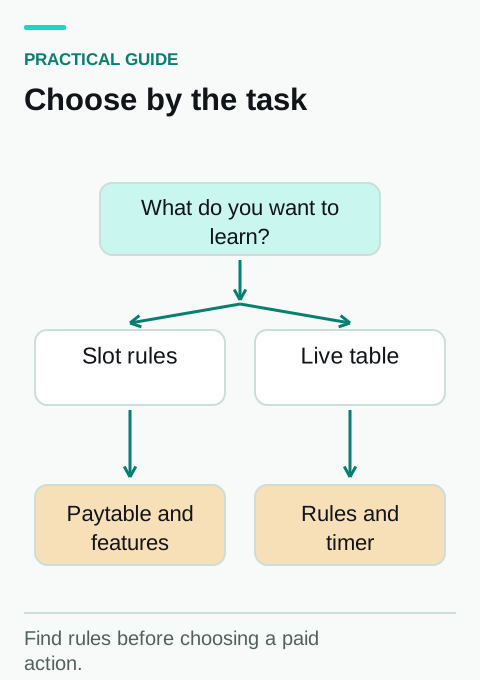
Choose the account, offer, game or payment guide according to your task. Read the withdrawal route before funding, and check the brand and conditions beside any partner offer.
NEXT STEP
Explore the separate 22BET offer
The labelled partner link concerns 22BET. Read the current eligibility and offer terms on that service.
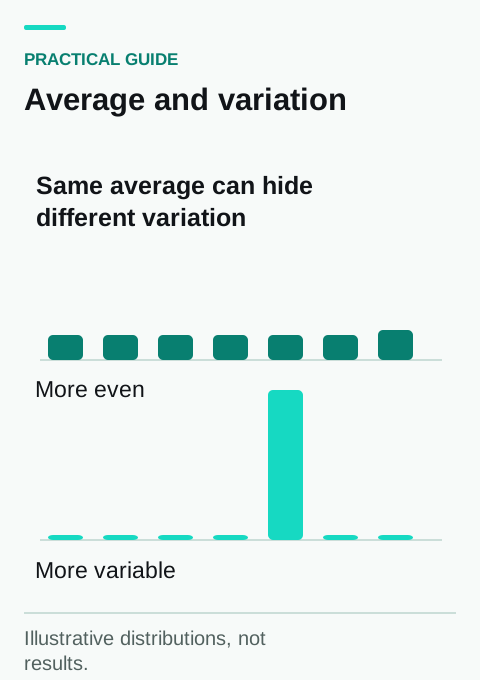
RTP is a theoretical long-run return published for a game configuration. It is not a prediction for one evening. Volatility describes how outcomes tend to be distributed, from more frequent smaller results to less frequent larger swings. A game can have a familiar RTP and still feel very different because its volatility, bonus frequency and stake options shape the session.
SESSION SHAPE
Compare session shape
RTP and volatility answer different questions. This tool explains the pair without inventing game values.
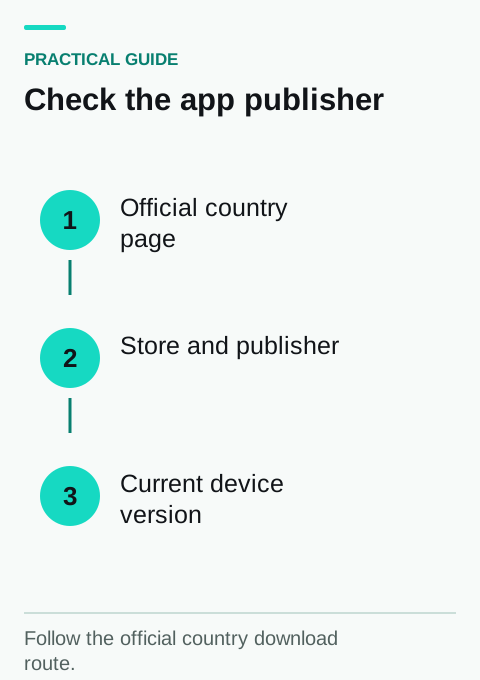
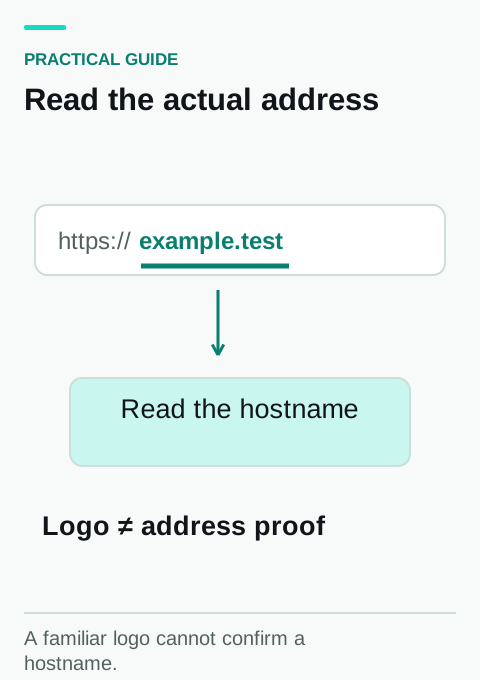
The official Ireland site promotes the LiveScore Bet app and the casino also works through the web route. The browser is the quickest choice when you want to check a promotion or open one game without installing anything. The app is useful when you already use the same account for sports and Vegas. In both cases, verify the address, use the official account route and keep transaction history available for a withdrawal check.
What this guide checks and what it leaves to the lobby
Offer counts, time windows and withdrawal figures come from LiveScore pages checked on 14 October 2026. Game catalogues and account payment choices can change, so the current lobby and cashier remain the final source for availability. This guide does not invent a rating, promise a payout speed or claim a payment method appears when the public evidence does not show it.
Ireland checks that belong beside the casino facts
A useful casino guide should help with the decision around play, not just the route into the lobby. Confirm that the account is set to Ireland and EUR, use a payment method you control, and finish any requested identity check before relying on a withdrawal estimate. Set a cash limit and a time limit before the session starts. If play stops feeling controlled, leave the lobby and use the responsible-play page for Irish support routes. These checks apply whether you choose a slot, table game, live show or the welcome offer.
The date beside each guide records when its public facts were checked. It is not a promise that a lobby tile, promotion or cashier option will stay unchanged. That distinction matters most with game availability and account-specific payments. The current operator screen wins whenever it differs from this guide, while the guide remains useful for comparing the verified routes before you open that screen.
NEXT STEP
Explore the separate 22BET offer
The labelled partner link concerns 22BET. Read the current eligibility and offer terms on that service.
Questions people ask about livescore vegas ireland: games, offer and cash-out routes
What is the quickest route for LiveScore Vegas?
Use the first task link on this page, then confirm the current figure or availability on the operator screen.
Are the offer and payment figures current?
They were checked against official LiveScore Ireland pages on 14 October 2026. Account options can still change.
Where do the labelled 22BET buttons go?
Buttons labelled 22BET open a separate 22BET partner offer. They do not open the LiveScore Vegas account described in the editorial guide. The publisher may receive a referral payment.
LiveScore Vegas Ireland: a practical guide organised around your next decision
LiveScore Vegas brings casino questions into a brand that many people already associate with sport. That familiarity can make the first visit feel straightforward, but a useful decision still needs the right information. The question might be whether an Irish welcome offer applies, which exact slot a set of free spins uses, how to read a withdrawal status or whether an app is the most convenient way to find a particular rule. These questions belong to different parts of the service. Answering one does not automatically answer the others.
This guide follows those decisions in a usable order. Begin with the account and the Ireland-specific route, then separate the promotion from the game and the payment. If you already know what you need, use the sign-up guide, 300 free spins explanation, withdrawal guide or slot directory. A longer homepage should help you identify the relevant next step rather than require you to read every section before finding one answer. The worked examples below are original explanations; hypothetical figures are labelled and do not describe a deposit or payout test.
Start with the task, not the most prominent tile
Write the purpose of the visit in one sentence before opening several categories. “I want to understand the offer already shown to my account” leads to a different route from “I want to compare two Megaways games.” If the task is a withdrawal, start with the transaction and method rather than a new promotion. This small distinction prevents the navigation from making the decision for you. A bright tile can be useful as a shortcut, but its position does not establish that it answers your particular question or that its conditions fit your account.
Once you have a task, define what a complete answer looks like. For an offer, that may mean knowing the qualifying action, eligible game, acceptance step and expiry. For a payment, it means identifying the current status and the next party in the process. For a game, it means understanding the exact version and total stake. If the necessary information is missing, the visit can end with a precise support question. There is no need to convert an unresolved information search into a new deposit or a game merely to keep moving through the site.
Keep the Ireland route distinct from another country's results
Search engines can show similar brand pages for different countries. Check the country route, currency and scope of the help page before using a figure. A title mentioning LiveScore does not make every linked page an Irish casino source. Likewise, a familiar euro symbol does not establish that a particular promotion is available to every Irish account. The full address and the terms attached to the activity matter together. This is particularly important when a review has been updated at a different time from the operator page it describes.
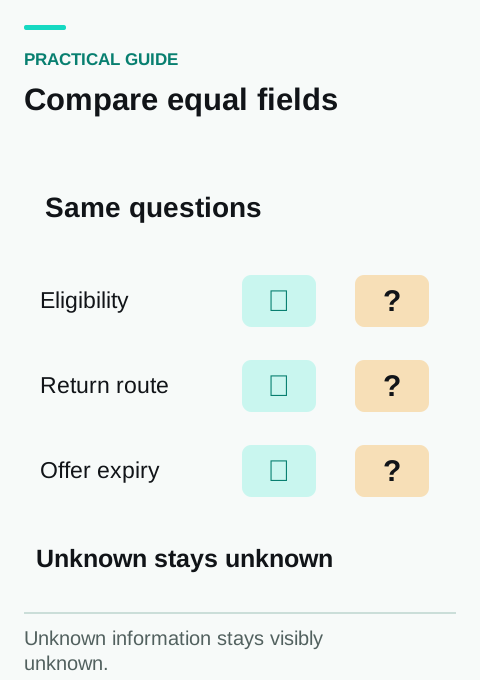
For a simple evidence note, record the page title, address, country and date. Do not copy a UK minimum into an Irish comparison by changing the currency sign. If an Irish detail is not available, mark it as unknown until you can check the appropriate cashier or official help. The Ireland casino guide explains the broader comparison process, while this page focuses on LiveScore Vegas. A source can be useful for explaining a concept without supplying a current country-specific amount. Keeping that distinction visible makes the whole guide easier to update.
Separate the operator, the guide and a partner offer
An information page can discuss LiveScore Vegas and also display a promotion for a different operator. Read the brand beside the offer rather than treating every number on the page as a LiveScore term. A partner card has its own destination and conditions. It does not change the rules of the native LiveScore welcome promotion or establish availability within the LiveScore cashier. This distinction remains relevant even when the two blocks share similar colours or appear close together on a mobile screen.
Use the dedicated about page and site terms for publisher information, and the relevant operator source for the service itself. When saving a promotion note, put the brand on the first line, followed by the precise offer title. That prevents an amount from one card being repeated later as a claim about another company. It also makes a support message more useful: the operator needs the campaign that belongs to its own account, not a screenshot of an unrelated comparison card elsewhere in the article.
A usable account is more than a completed registration screen
Registration, identity checks and the ability to complete an intended payment are separate questions. Before relying on a future withdrawal, review the current account status and any outstanding requests. A successful login does not prove that every account function is ready. Equally, a request for more information should be read for its specific purpose rather than treated as a reason to submit several different documents at random. The next step should match the request that is actually visible through the official account route.
The LiveScore Vegas sign-up guide is a map of the process, not a promise that every person will see identical screens. Prepare accurate contact details and use your own account information. If the interface reports an inconsistency, resolve that item before adding a new financial action. A short private note can record the date, the requested step and whether it has been completed. It does not need to contain document images or passwords. The aim is to understand readiness, not to duplicate the sensitive material already supplied through an authorised channel.
Identity, address and payment ownership answer different questions
A document establishing a person's name may not answer the same question as evidence of an address or ownership of a payment method. When an account requests a particular category, read the accepted format and required details. Sending an unrelated item can delay clarification because it leaves the original question unanswered. If you are unsure which information is necessary, ask through the official support route before sharing more. A support conversation should explain the specific gap rather than encourage indiscriminate disclosure.
Keep the practical sequence narrow: identify the request, check the official submission route, supply the relevant information and inspect the resulting status. Do not assume that sending an item instantly completes the review. Retain the confirmation or case reference so that a later question can refer to the same event. The support guide helps organise that follow-up. These are document-handling principles, not a fixed list of what every LiveScore applicant will be asked to provide. The current account request determines the exact action.
Recover the existing login instead of creating a second problem
If you cannot access an existing account, begin with the official recovery path and the contact associated with it. A saved password manager entry may refer to an old email address, another browser profile or an earlier password. Repeatedly trying variations adds uncertainty without identifying the cause. Check the address of the service first, then follow one recovery attempt carefully. If it fails, note the exact message and time rather than opening several simultaneous recovery flows on different devices.
The login guide separates access problems from game or payment problems. After access is restored, inspect the account history and settings before starting a new transaction. A new device can show a different layout, so look for the function you need rather than the remembered position of an icon. Creating another account is not a sensible diagnostic method for an existing-login issue. It would create additional information to reconcile while leaving the original record unresolved. A clear recovery sequence preserves the connection between the account, its history and its verified contact details.
Check account readiness with an information-only visit
You can inspect much of the information needed for a decision without placing a paid game round. Find the current offer detail, locate transaction history, read a game help panel and review available account controls. This is an interface check. It should not be reported as a successful deposit test, an actual cash-out or a session of real-money play. Being precise about the kind of check makes a review more credible and gives you a useful list of anything still unresolved.
For your own visit, choose three functions to locate: the rules you need, the history that will record an action and the route for asking about a problem. If one cannot be found, note the device and page. That is a specific usability finding. It does not justify an assumption that the function never exists or that every visitor has the same experience. A clear information-only visit can end once the questions are answered. It establishes familiarity with the route while keeping later financial decisions separate and deliberate.
Understand what a dated check establishes
A date beside a guide tells you when its stated evidence was reviewed. It does not promise that the service will preserve the same offer, game catalogue or payment option indefinitely. Read the date together with the scope of the check. Opening a public help page establishes what that page said at that time. It does not establish a successful identity review or an account-specific payment result. A genuine transaction test would need its own method, timestamps and limitations.
When comparing two dated sources, first check whether they describe the same product and event. One might discuss a slots campaign, while another refers to a live-casino promotion. Their different figures do not necessarily conflict. If they do address the same campaign, prefer the current applicable primary terms and identify the old statement as historical. The promotions guide is designed to separate these questions. A useful update changes the affected fact and its source rather than replacing one unsupported headline with another.
Use a compact decision sheet for the first visit
Five fields that keep a LiveScore Vegas question specific
Field
Example of what belongs there
What it prevents
Task
Understand the offer shown to this account
Drifting into an unrelated product
Source
The exact Irish offer or help page
Mixing countries or old campaigns
Confirmed point
The requirement actually displayed
Replacing evidence with memory
Open question
The missing eligibility or status detail
Assuming a blank means approval
Next step
Read the detail or ask one support question
Using another payment as a test
This sheet is useful because it has an ending. Once the confirmed points answer the task, no further investigation is required for that visit. If a question remains, the next step is explicit. You can return later without starting from an unstructured collection of tabs or screenshots. Keep the note private and omit login credentials. It is an aid to decision-making, not a second account database. The same structure can be reused when a promotion changes, while the actual entries remain specific to the new date and campaign.
Read the LiveScore Vegas welcome route as a sequence
The official Irish page checked for this guide presents a slots welcome route involving €10 of qualifying play and 300 free spins on Big Bass Bonanza, with no further wagering on the spin winnings. It also identifies the advertised registration path as an eligibility condition. This is the native LiveScore campaign, separate from any partner promotion elsewhere on the site. Read the applicable full terms for the account, including the funding, timing and acceptance requirements, before taking part. Source: official Irish welcome offer.
The headline describes an outcome, not every step to reach it
A short promotion headline leaves little room for the complete path. To understand one properly, translate it into events: an eligible account is created, a permitted funding action occurs, the required activity is recorded, the reward is accepted if required and the reward is used under its own conditions. Treat each event as a checkpoint. A later checkpoint does not prove that an earlier one was satisfied. For example, being able to open a game is a different fact from having joined through the required campaign route.
This way of reading an offer is useful even when the campaign changes. You are not memorising a single number; you are identifying the logic that connects the steps. On the 300 free spins page, compare the description with the current offer detail and account display. If they differ, pause before making a qualifying action. The useful question is which exact condition applies to that account now. Guessing from an older registration email or a generic bonus review can leave the most important step unresolved.
Deposit amount and qualifying play are different measurements
In a hypothetical promotion, depositing €15 and making €5 of eligible cash stakes would create two separate measurements: funding of €15 and qualifying play of €5. Neither figure should replace the other. A deposit describes money entering the account, while qualifying play describes activity counted under the campaign. Depending on the actual terms, only some activity may be included. A calculator that asks for qualifying play must therefore not silently accept the deposited amount as though the two were equivalent.
A simple personal note can have a funding row and an activity row. Record the bank or cashier status in the first, and the campaign's own progress evidence in the second. Do not add another deposit solely because the progress counter has not moved. First check whether the original transaction completed and whether the activity was eligible. This avoids creating additional movements while trying to diagnose a display or eligibility question. The deposit guide explains the payment side; the offer terms explain what counts towards the campaign.
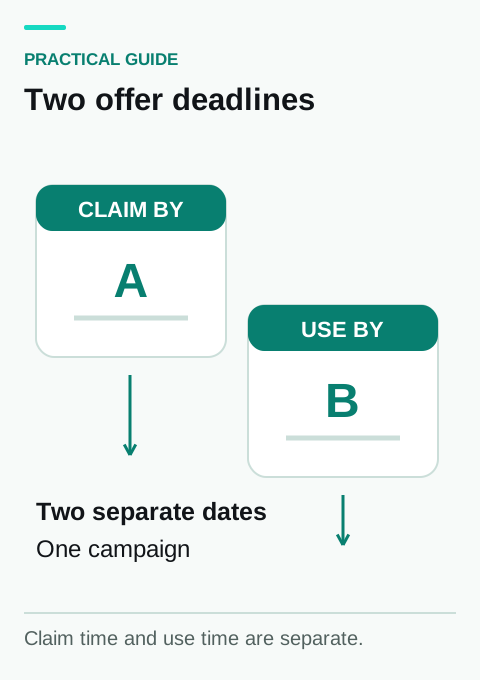
Use separate clocks for qualification, acceptance and use
A promotion can contain more than one deadline. One clock may relate to the initial qualifying activity, another to accepting a reward and another to using it after allocation. The clock needs both a starting event and a finishing rule. “Three days” is incomplete if you do not know what starts the period or which time zone controls the deadline. Read the campaign-specific wording rather than applying the same clock to every phase. Keep a note of the actual date and time when an important state changed.
For a generic example, imagine qualification is recorded on Monday, acceptance occurs on Tuesday and reward use has its own expiry. It would be wrong to assume that all periods restart on Tuesday just because one action happened then. This example does not define the current LiveScore timetable. It illustrates why the terms should be split into separate entries. If a deadline is unclear, ask before relying on the last possible moment. Technical support can clarify an applicable rule; a homemade countdown cannot establish one that the source has not explained.
An acceptance notification deserves its own check
If an offer requires an acceptance action, completing the earlier activity is only part of the process. Look for the campaign-specific notification or reward area through the official account interface. Do not assume that a general marketing email is the same thing as an accepted reward. Equally, a browser notification permission is not the same as accepting a promotion inside an account. These controls can look related on a phone, so read the label and purpose of the action before selecting it.
When the expected notification is missing, capture the facts that are already known: account route, campaign title, time of the qualifying event and the progress or message currently displayed. Then check the relevant terms and support route. Opening many new sessions or repeatedly refreshing during a financial action can obscure which event happened first. The aim is to identify whether the issue concerns eligibility, an unfinished acceptance step or a delay in display. Those are separate explanations and require different evidence. A missing pop-up by itself does not identify the cause.
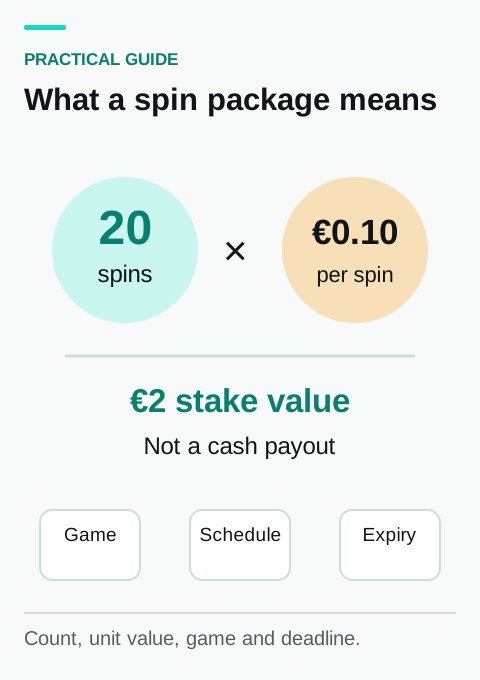
Nominal spin value is not an account balance
In a teaching example, 120 spins at €0.10 represent €12 of nominal staking value. The multiplication is useful for understanding the size of the allocated play, but it does not create a €12 cash balance. The spins may be restricted to a specific title and their outcomes remain variable. A zero result, a smaller amount or a larger amount can arise from the actual game. Do not enter nominal spin value into a withdrawal plan as though it were already cash received.
For a real reward, record three things separately: the number of spins allocated, the amount actually resulting from them and the status of those proceeds under the applicable terms. This makes the difference visible without needing a complicated spreadsheet. The free spins guide explains the instrument, while no-wagering free spins addresses the meaning of the wording. The label does not erase identity, payment or eligibility requirements elsewhere in the account. It answers a particular question about the reward's stated wagering treatment.
Match the exact reward game before using a guide
Free spins allocated to one game should not be assumed to work on every title with a similar name, theme or provider. Compare the complete title in the reward with the game you are opening. A sequel, enhanced edition or related fishing-themed slot may be a different product. If the reward game is not visible, clear the relevant category filter or use exact-title search where available. Then inspect the reward status rather than launching a different paid game to see whether the spins follow.
The Big Bass Bonanza guide is linked because the current checked Irish page names that title. A third-party article naming another game does not automatically update the offer. It may refer to another campaign or date. When the live terms change, the eligible game should be updated from those terms. Until then, keep the source-specific claim narrow. This is an example of why operator evidence is more useful than choosing the most recent-looking headline from several unrelated reviews.
What “no further wagering” answers and what it leaves open
The phrase concerns a particular play-through condition attached to proceeds. It does not turn promotional spins themselves into transferable cash or establish that every account requirement has been completed. Read it alongside the definition of the reward and the conditions that led to allocation. A person who has not satisfied the qualifying path cannot infer eligibility from a favourable description of winnings. Each stage still needs its own confirmation. The practical benefit of precise wording is that it lets you ask the right narrow question.
For a comparison, avoid compressing different campaigns into a single “zero wagering” badge. One may have qualifying activity before the reward, another a different eligibility route and another a restricted game list. Compare the complete sequence, not only the treatment after a winning result. The bonus terms guide provides the vocabulary for reading those differences. Once the terms are understood, the decision can be simple: the conditions fit your original plan, they do not fit or a necessary detail still needs confirmation. None of those outcomes requires guessing a personal profit.
Keep a reward enquiry separate from a payment enquiry
If a bank payment completed but an offer has not appeared, you have evidence about funding and an open question about the campaign. A banking confirmation cannot by itself establish bonus eligibility. Conversely, a visible reward does not explain whether an unrelated withdrawal has been processed. Give each issue its own subject when contacting support. The account may connect the events, but the evidence needed to investigate them differs. Combining several unresolved questions into one vague complaint makes it harder to identify a precise next action.
A useful reward enquiry names the campaign, identifies the completed step and states what is missing. A useful payment enquiry includes the transaction reference, method, currency and visible status. Neither needs a password or full card details. Keep replies attached to the relevant case where possible. If the operator explains a link between the two issues, add that fact to the record. You then have a clear relationship supported by the response rather than an assumption that every delay on an account must have the same cause.
Compare two offers with the same questions
A comparison grid that works even when headline numbers differ
Question
Offer A
Offer B
Who is eligible?
Copy the applicable category
Use the same scope
What happens before reward allocation?
Separate funding and activity
Separate funding and activity
Which game or product is involved?
Record the exact title or list
Record the exact title or list
Which deadlines apply?
Identify each starting event
Identify each starting event
What can the resulting proceeds be used for?
Read the relevant conditions
Read the relevant conditions
Does it fit the original plan?
Yes, no or unresolved
Yes, no or unresolved
The grid does not produce an automatic winner. Its purpose is to make unlike numbers comparable in meaning. A larger maximum may be irrelevant to a small planned session, while a familiar game may matter more than a headline count. If one column is missing information, leave the gap visible. Filling it with a generous assumption would create a neat-looking comparison at the expense of accuracy. The Ireland bonus comparison guide is most useful when it applies this same evidence standard to each option.
Choose a LiveScore Vegas game by the information you can verify
A game directory becomes useful when it helps you compare formats and rules rather than simply display more thumbnails. Begin with what you want to understand: a slot's combination system, a live table's decisions, a jackpot's eligibility or a hybrid game's round structure. Then open the exact title and its help panel. The online slots guide, live casino guide and individual game pages serve different parts of that process. The current Irish lobby establishes availability; an explanatory page supplies context for reading the information.
Exact title, provider and version come before a comparison
Two games can share a theme while using different rules. A suffix, sequel number or edition name may identify a separate product. Before comparing a return figure or feature, write the complete title and provider as shown in the current game. Then match the help panel to that version. If the game information differs from a review, do not silently substitute the review's figure. The difference may concern configuration, date or an entirely different title. A comparison is only meaningful when the objects being compared are clearly identified.
This matters in a directory containing names such as Dead or Alive 2, Esqueleto Explosivo 2 and Moon Princess 100. Removing the distinguishing part of the name in your notes can erase the information needed to find the right rules. A good game card therefore starts with identity, continues with mechanic and ends with any verified parameter. If a parameter is missing, the card should preserve that gap rather than borrowing a number from a related release.
Read the stake display as the price of the complete action
A control can display a stake per line, a total stake or the price of an optional feature. These are not interchangeable units. Before starting, identify which amount is attached to the action you are about to confirm. Changing a line count, stake level or extra option can alter the total even if one small number remains unchanged. The useful question is “what will this complete action cost?” rather than “what is the smallest number on the screen?” This applies to slots, table layouts and hybrid formats.
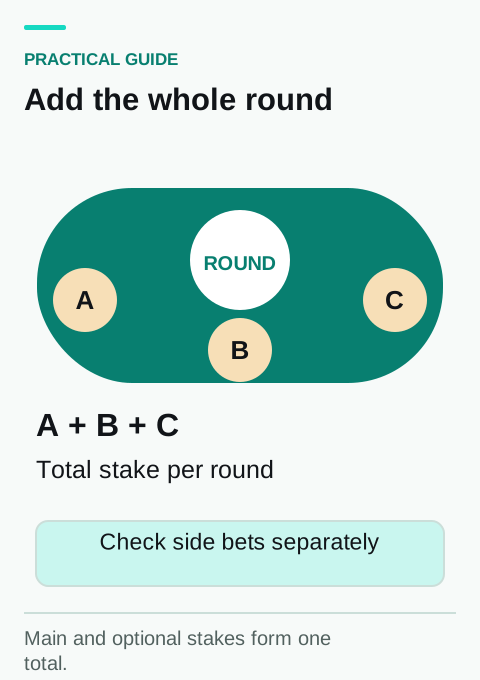
Take a hypothetical interface showing €0.02 per unit and 15 active units. If the rules define total stake as their product, the complete action costs €0.30. If an optional setting doubles that total, the action becomes €0.60. This is a teaching example, not a LiveScore game tariff. It shows why the total confirmation deserves attention. The same principle applies when several roulette chips are placed on a table: the overall round exposure is the sum of all accepted bets, not only the chip that was selected most recently.
Fixed lines and changing ways need different reading habits
A line-based game asks you to understand the arrangements that qualify as combinations. A changing-ways game can alter the available symbol layout or ways according to its rules. Neither description establishes a favourable short-term result. It explains how to interpret the playfield. Read the paytable and identify whether combinations need to start from a particular side, follow a specific pattern or meet another requirement. A visually adjacent group of symbols does not necessarily have the same meaning across different mechanics.
When using the Bonanza Megaways guide, focus first on the precise rules the current version presents. Do not assume that every game with “Megaways” in its title has identical bonus conditions or costs. A useful comparison note lists what changes during a round, how the game evaluates a combination and what triggers a feature. It does not rank games merely by the largest displayed ways count. That number is one feature of the model, while the full rules determine how it connects to results and paid actions.
Clusters, cascades and features describe events, not guarantees
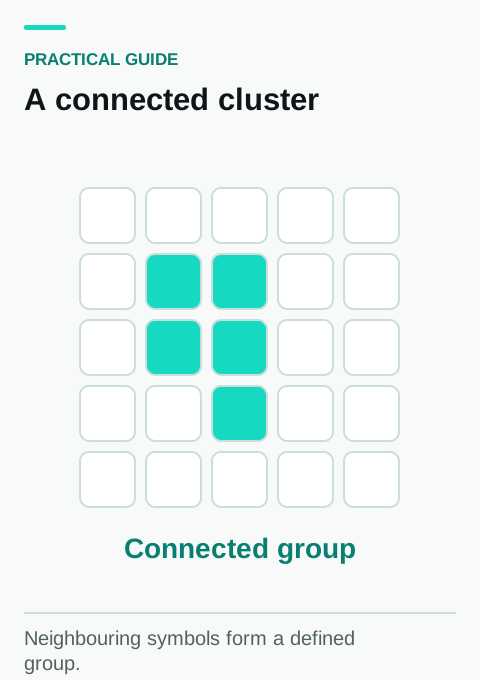
A cluster mechanic and a cascade mechanic answer different questions. One concerns the arrangement needed for a qualifying combination; the other concerns what happens after a result, such as removal and replacement of symbols under the game's rules. A title can combine these ideas in different ways. Read them separately. A cascade animation is not evidence that the next replacement must produce another win. Likewise, a screen containing almost enough symbols for a feature does not establish that the feature is becoming due.
For games listed under Aztec Clusters or Jammin' Jars 2, use the individual guide to identify the questions to check in the actual game. Keep an explanation of mechanics separate from claims about today's configuration or availability. If you cannot explain what triggers a feature, the useful next action is to read its rule. Running more paid rounds just to wait for an explanation from the animation is an expensive way to obtain information that should already be accessible in the help panel.
Base stake and a purchased feature can be very different amounts
Some games or configurations offer optional paid actions. Where such an option is present, its price can be expressed as a multiple of the base stake. Read the whole confirmation rather than assuming the normal spin amount applies. In a hypothetical example, a base stake of €0.15 and a feature price of 80 times stake produce a €12 action. The calculation is independent of any specific game in the LiveScore lobby. It illustrates why a small base stake is not enough information to evaluate every button.
An optional feature also needs its own rule check: what exactly is bought, which outcomes remain variable and whether the current promotion permits that kind of activity. Do not confuse a paid feature inside a game with a reward supplied by the casino. They can both use the word “bonus” while referring to unrelated things. The Money Train 3, Fire in the Hole 2 and Densho pages should be read as distinct guides, with current game information controlling any particular option.
RTP is a long-run model parameter, not a session target
Return to player describes an average over a large volume of play, rather than the amount a person should expect back in one session. The UK's Gambling Commission explains this distinction in its public educational material; that explanation is useful mathematics and does not establish Irish licensing for a game. A displayed percentage should be matched to the actual configuration being opened. Source: Gambling Commission RTP explanation.
Suppose two hypothetical models state 95% and 97%. The difference is two percentage points, but that does not let you predict a forty-cent advantage during a €20 visit. Actual short runs can vary, and “€20 visit” itself may mean deposit, total stakes or final loss. The RTP guide explains the terms and high-RTP slots guide helps organise a comparison. Use a blank field when the current configuration is unverified. Apparent precision from the wrong version is less useful than an honest boundary on the available evidence.
Volatility, pace and price are separate dimensions
A volatility description concerns the distribution of outcomes. Pace concerns how rapidly paid actions can occur. Price concerns the amount attached to each action. Combining the three into one vague “risk score” hides useful differences. A game can have a small minimum stake and still permit rapid accumulation of total stakes. Another may move slowly but include substantial optional bets. The practical comparison should show each dimension separately and leave unavailable information clearly marked rather than inventing a numerical rating.
For a hypothetical session, 30 actions at €0.20 represent €6 of nominal stakes, while 150 actions at the same amount represent €30. Neither total is a forecast of the final balance. The calculation simply shows the effect of activity count. A time limit and a cash limit answer different questions, so one does not replace the other. Use the volatility guide for definitions, then choose an activity and stopping point before opening the game. A description such as “balanced” cannot define that personal plan for you.
A live table needs a rules check and a connection check
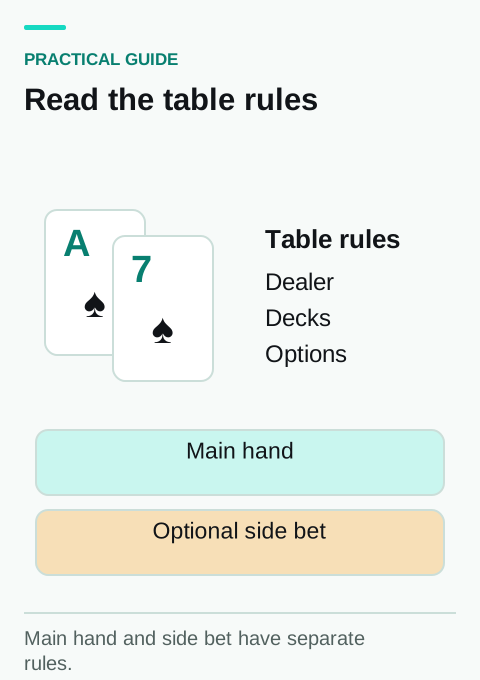
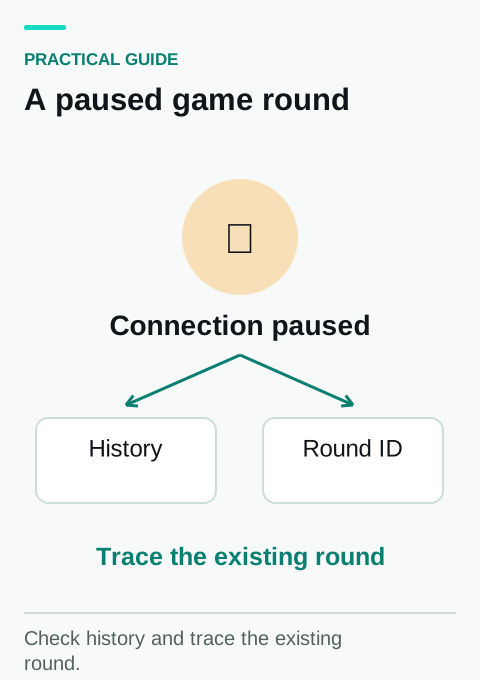
Before joining a live table, confirm the exact variant, the available choices and the total of any main and side bets. Then check whether the presentation gives you enough time to understand the controls. A clear video stream is useful, but it is not the acceptance record for a wager. If the picture freezes, the account history may still contain the relevant round. This is why knowing where to find a transaction record matters before the first paid action.
The live casino guide separates game rules from the viewing experience. A dealer's pace, studio design or language can affect usability without altering the meaning of a particular rule. Observe the layout first if you need time to read it. You do not have to match the activity of other participants. If a control is unclear, leave the table and find its explanation. A live format should be chosen because its rules and interface are understood, not because a countdown makes an incomplete decision feel urgent.
Slingo is a distinct format with its own round structure
Slingo combines numbered-grid matching with reel-based outcomes. The official Slingo explanation describes the relationship between the grid, revealed numbers and completed lines, while also noting that individual titles can differ. That makes it useful to read the round structure before treating Slingo as an ordinary single-spin slot. Source: official Slingo overview. A category name is a starting point; the exact title still supplies the applicable sequence and price.
For your own comparison, identify the initial paid action, the number of steps it includes and any later optional purchase. A nearly completed grid can create a strong visual sense that another step is needed, but that feeling does not establish the value or outcome of an additional paid action. Read its displayed cost and rules as a new decision. Keep it within the original plan rather than treating it as an unavoidable continuation. This approach is useful for hybrid formats generally: the end of one included sequence should be distinguishable from a separately priced extension.
Demo availability and real-money readiness are different checks
Where a demo is available, it can help explain controls and the sequence of a feature. It cannot establish how a later paid session will end. Check that the screen clearly identifies the demo state and demonstration balance. When leaving it, inspect the mode and stake again. An interface may preserve some settings while changing others, so familiarity with the animation is not enough to confirm what the next action will use. The distinction should remain visible even when the two modes look similar.
Do not describe a demo visit as a payment test or a verified withdrawal experience. It answers an interface question, not a banking question. Likewise, a short favourable demo result does not validate a system or suggest that a paid game is ready to produce the same pattern. The games directory should link to explanations rather than imitate a functioning game with an invented outcome. A useful preview teaches the meaning of controls and rules. It does not need to manufacture evidence of winnings to help someone understand the format.
Build a comparison card that can be updated later
One card per exact game version
Item
What to record
Identity
Full title, edition and provider
Mechanic
How qualifying combinations are defined
Paid action
The complete price of the selected action
Extra options
Any separately priced choice and its rule
Published parameters
Only values confirmed for this version
Availability
Whether the Irish lobby currently shows it
Evidence
Source and date, including any unresolved detail
The card is deliberately small. It preserves the information needed to compare two titles without turning every game into a long generic review. If a version changes, update the affected entry and date. If only the thumbnail changes, do not assume the rules have changed too. If an official parameter is unavailable, preserve the uncertainty. A directory built this way remains useful because its claims can be traced to specific versions, while the explanations of combinations, stakes and round structure continue to help the reader ask the right questions.
LiveScore Vegas payments: follow the transaction, not a generic speed badge
A payment has several stages, and the most useful question depends on the stage you can actually observe. A bank authorisation, a credited deposit, a withdrawal request and a bank credit are different events. The payments hub links the relevant routes, while deposits and withdrawals explain their separate questions. Before using any estimate, identify the method and the point from which that estimate is measured. A successful build of an information page is not a payment test, and an operator estimate is not an individual promise.
Deposit status: authorised is not the same as credited
Imagine a bank application reports that a payment was authorised, but the casino balance has not changed. You have one confirmed observation and one unresolved outcome. First inspect the cashier or transaction history through the normal account route. The payment may have a visible reference and status that explains where it is in the process. Do not assume that an unchanged header means the bank rejected the action. Equally, do not assume that a bank authorisation establishes successful credit to the gaming account.
A useful enquiry records the amount, currency, method, time and status on both sides. If the bank shows a reservation rather than a completed debit, name it accurately. If the cashier reports failure, preserve that message too. A second payment would be a new event and should not be used as a diagnostic shortcut for the first. The objective is to reconcile one reference across the relevant records. Once that is done, you can decide what the next action should be without creating an avoidable cluster of similar transactions.
Read the cost from both sides of the payment
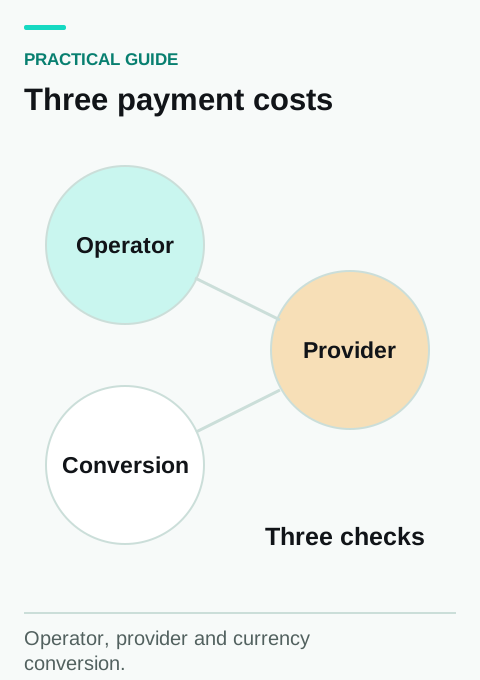
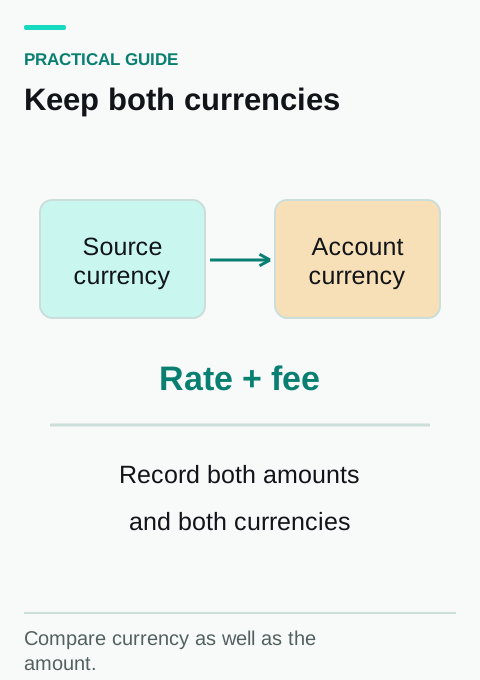
An operator's transaction fee and a bank's charge are separate items. A phrase such as “free deposit” may describe only the operator side. Check the financial provider's current conditions where a charge or currency conversion could apply. Avoid using a comparison site's list of bank logos as evidence of the price charged to your own account. The useful comparison is the amount credited to the gaming account against the amount actually debited by the provider, with any explanation for the difference.
In a hypothetical example, €18 reaches an account while a separate provider charge of €1.50 appears in the bank record. The total cash cost is €19.50. That is arithmetic, not a claim that LiveScore or a particular bank charges those amounts. It shows why a personal spending record should distinguish credit received and total outflow. If there is no charge, the two figures may match. If they differ, identify the source of the difference before attributing it to the casino or treating it as an unexplained game result.
Choose a funding method with the return route in mind
The easiest way to put money into an account is not necessarily the clearest way to receive a later withdrawal. Before funding, check the supported withdrawal route, account ownership requirements and available limits for that method. A method shown in a general information page may still be subject to account-specific availability. If a card or wallet is about to expire or become inaccessible, clarify the return route before creating a new dependency on it. This is a practical planning question, separate from the speed of the initial credit.
For your own checklist, use four fields: method used, name associated with it, withdrawal route and source of the rule. Keep sensitive full payment details out of ordinary notes. If a method is replaced, preserve enough information to identify the original transaction without exposing the entire card number. A support team can then explain what evidence or alternative route is required. The payout comparison guide is useful only when speed is considered alongside these constraints. A fast advertised transfer is irrelevant if the required method is unavailable to the account.
Net deposits are not the same as a game result
LiveScore's official closed-loop help defines net deposits for a particular payment method and explains why withdrawals can need to return through methods used for funding. It also describes circumstances in which a withdrawal may be split. These are method-routing rules, not a calculation of personal casino profit. Source: official net-deposit and closed-loop help. Follow the current account instructions rather than assuming that any visible wallet can receive every amount.
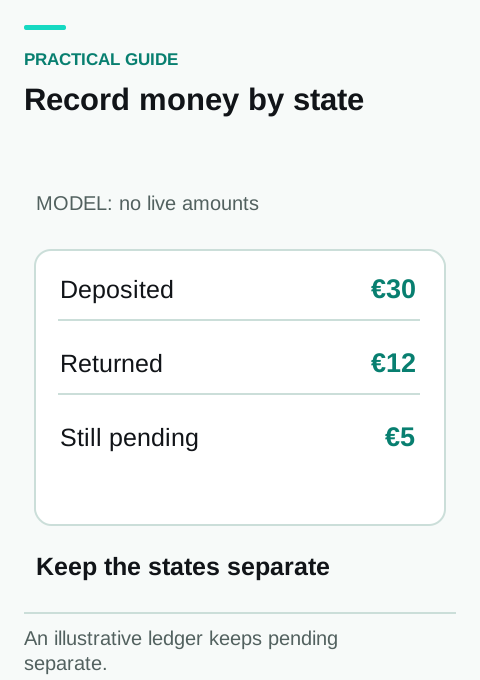
For a generic arithmetic illustration, a method with €90 of recorded deposits and €35 of recorded withdrawals has a difference of €55. That number does not include the complete game result, other methods, starting balance or pending movements. It therefore should not be labelled “loss”. A personal overall result requires a different reconciliation. Keeping the terms separate helps explain why a payment-routing screen can show a positive method balance even when the gaming account has another total. The two screens answer different questions and should not be forced to match by changing the label.
Pending and confirmed identify different stages
The official popular-withdrawal article explains that a requested withdrawal can leave the gaming balance while showing as pending, and that confirmed indicates funds have been sent. It directs users to transaction history for those records. The terms describe stages inside the process; confirmed is not the same observation as money already visible in a bank account. Source: official withdrawal questions. Identify the actual stage before comparing an elapsed time.
Suppose a request appears in history at 09:20 and changes status later that day. Your private timeline should preserve both events. If you only record the initial click and eventual bank credit, you cannot distinguish internal processing from transfer time. A precise support question might ask whether a particular reference is still under review or has already been sent. That is more actionable than saying that the whole withdrawal is “slow”. The stage determines which information is missing and whether the next enquiry concerns the operator's record or the payment provider's receipt.
Use the Irish timing guidance with its method and scope
The official ROI timing article says the operator aims to process withdrawals within 24 hours, then gives debit cards a general one-to-three-working-day range and bank withdrawals two to three working days, sometimes up to five. A separate official table lists more specific card and wallet estimates. Those pages should be read as guidance with differing scope, not collapsed into a universal instant-payout claim. Source: official ROI timing guidance.
For planning, use the applicable method information shown to the account and allow for the distinction between processing and provider transfer. If two official descriptions leave the route unclear, ask which estimate applies to the specific method and reference. Do not select the shortest number simply because it is more convenient. A working-day estimate also needs its calendar context. Weekends and bank holidays can matter where the source defines the period that way. A countdown drawn from an incomplete headline cannot improve the underlying evidence about the transaction.
A transfer reference is more useful than a screenshot of the balance
A balance image shows one aggregate state. It rarely identifies which of several nearby transactions caused a change. For payment enquiries, preserve the individual reference and the relevant status, date, amount and currency. If a bank statement is requested through the official process, follow the stated purpose and accepted format. A public review comment is not an appropriate substitute for an account enquiry, and it should not contain the sensitive material needed for identity or ownership checks.
A good message separates expected and observed facts: “This reference is marked sent in the account; I cannot yet find the matching bank credit.” Include the method and relevant time. If the bank provides a further reference, connect it to the same case. Avoid opening a fresh ticket for every small update unless the support process specifically requires it. A continuous record lets the next response address the latest known state. It also prevents a later answer about one transaction from being mistaken for a resolution of another similar payment.
Reconcile the complete visit with a consistent formula
For a simple cash-only personal record, use ending balance plus completed withdrawals minus starting balance minus completed deposits. In a hypothetical visit, the starting balance is €7, deposits total €18, withdrawals total €10 and the ending balance is €12. The result is €12 + €10 − €7 − €18 = −€3. The final gaming balance is not the result on its own, because money also entered and left during the visit. This example does not describe a real LiveScore account or any claimed testing experience.
Keep unresolved movements separate so that they are not counted twice. A withdrawal already removed from the gaming balance but still in transit needs a consistent treatment in your private record. Promotional instruments with different conditions should also have a separate note rather than being treated as freely received cash. The purpose is a reconciliation, not a prediction. If the numbers do not match, identify the first event where the difference appears and compare that reference with the official history. A general feeling about the last game cannot resolve an accounting mismatch.
A changed card or bank account needs a specific update
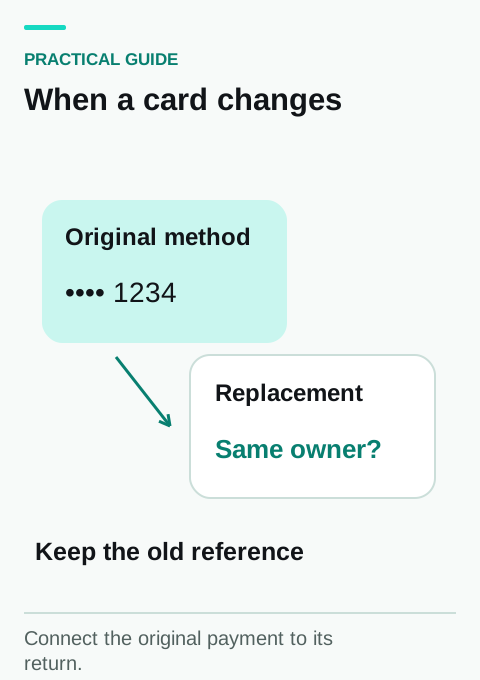
When a payment method changes, first identify which old transactions and return-route requirements are still relevant. A new card in a mobile wallet may look familiar while representing a different payment credential. A changed bank account may need its own verification. Do not infer that access to a banking app settles ownership or routing questions. Use the current account instructions and ask about the exact old method if it is no longer usable. This is an account-maintenance issue, not evidence that creating another gaming account is necessary.
Prepare a narrow description: which method changed, what happened to it and which transaction you are trying to complete. Supply documents only through the official route requested for that purpose. Keep an ordinary private note to the event and case status rather than copying entire statements into it. Once the account confirms the updated route, compare the next transaction against that confirmation. This preserves a clear chain from the old funding event to the new authorised return method without relying on memory or generic advice from a different operator.
Use limits and processing estimates for different decisions
A minimum or maximum describes an accepted transaction range. A processing estimate describes timing. Neither tells you how much you should deposit or withdraw. A displayed maximum is an administrative boundary, not a target. Likewise, a fast method does not create room in a personal budget. Keep the personal decision independent: identify the amount already allocated for the purpose, then check whether the method can carry that action under its actual rules. If it cannot, the answer may be to choose a supported route or not proceed.
For a hypothetical method with a minimum greater than your planned amount, increasing the payment merely to reach that minimum changes the plan. Recognise that change explicitly before deciding. If you are withdrawing a remaining balance below the ordinary displayed minimum, consult the current official help rather than assuming the balance must be played. The withdrawal guide links the relevant route. Transaction restrictions should be clarified as account questions; they should not become an unexamined reason to create more gaming activity.
A payment case can end without another visit to the lobby
Once the reference has been reconciled, record the outcome and any genuinely outstanding step. If the bank credit arrived, that resolves the transfer question. If the operator explained a rejected request and the correction is clear, that establishes the next administrative action. Neither outcome requires a new game. Separating case resolution from playing activity is useful because the attention needed to follow a payment can otherwise feel like a reason to reopen every part of the account.
A concise closing note has three statements: what was uncertain, which record resolved it and what remains to be done. For example, a missing apparent credit may turn out to be a bank reservation that was released. The relevant result is the clarified bank state, not the absence of a new casino balance. This kind of note makes future comparisons more accurate because it preserves the event type. It also keeps a review honest: solving an information question is not the same as having tested every payment method or establishing a universal payout speed.
Mobile use, source checks and practical LiveScore Vegas cases
A useful mobile experience includes readable rules, understandable confirmation screens and a way to recover the context after leaving a banking app or opening a help article. It is more than a quick-loading lobby. The LiveScore Vegas app guide and mobile casino guide explain the available routes. Choose the environment for the task you need to complete, and keep the same account history in view. The following checks can be done as information tasks without placing a paid round as a technical experiment.
App or browser: compare a complete task
Choose one task such as finding the rules of a named game. In each environment, note how you reach the title, open the information panel and return to the directory. Then repeat with the relevant account history or promotion detail. This produces a meaningful comparison because you are following the same task. Timing only the first screen can miss the part that actually matters. An app might open quickly while a particular detail remains difficult to read, or a browser might make it easier to keep a source beside the account page.
Do not turn that small comparison into a universal performance verdict. Different devices, connection conditions and account states can produce different experiences. Record the device and the specific function that helped or failed. If an eligible title is absent in one environment, compare the exact name and active filters before drawing a conclusion. The right choice is the route that makes the current task clear and workable. It does not have to become a permanent commitment to using one environment for every future question.
Test readable numbers before testing animations
On a small screen, financial information can be harder to read than the surrounding artwork. Check the decimal separator, currency symbol and full amount before confirming an action. Increase text size or zoom where the interface supports it. Then make sure the important controls remain distinguishable. A clipped label or a keyboard covering the confirmation area is a specific problem worth recording. Do not rely on the colour of a button alone to decide what it will do. Read the action and its associated amount.
For an information-only check, open a long rules panel and locate its close control. Confirm that you can scroll the content without accidentally moving the page behind it. If the screen changes orientation, check whether the reading position and selected action remain clear. These observations help you decide whether the environment suits the task. They do not establish that a paid action has been accepted. After any real transaction, its confirmation and history remain the relevant evidence, even if the visual transition looked smooth.
Keep the return from a banking app in the same sequence
A mobile payment can move between the browser, a payment screen and a banking app. Before starting, know which original screen you will return to for the result. After authenticating, follow the provided return route and inspect that status. Opening a second copy of the cashier can create two screens with different freshness. This may look like a missing payment even when one view simply has not updated. The goal is to complete and verify one event before creating another.
If the return fails, preserve the time and any reference already available. Then use the normal account history to check the outcome. Do not assume that the lack of a browser redirect means the bank did not act. Equally, a banking app's successful authentication does not prove that every subsequent step completed. A clear description mentions exactly where the sequence stopped. This lets support distinguish a navigation issue from an unresolved payment state without requiring you to make another payment to reproduce the same uncertainty.
Notifications should have a clear purpose
Account messages, browser permissions and device notifications are different mechanisms. A browser prompt asking to send notifications does not itself activate a casino promotion. An email about a campaign does not necessarily show the account's completed status. Read the purpose of each control and decide whether it is useful on that device. On a shared or visible phone, notification previews can also reveal information to someone nearby. Consider the display settings in the context of how the device is actually used.
If you are following an active administrative case, record the case reference and check the official account route at an appropriate time. You do not need every marketing notification to remain aware of that one issue. Likewise, disabling general notifications should not lead you to assume that a campaign has no acceptance or expiry conditions. Keep the relevant rule in your own decision sheet. The promotions page explains offer types, while the account's own messages establish what has been served to it.
Connection quality and game settlement are separate observations
A weak connection can affect video, artwork and the visible timing of updates. If a game screen stops moving, first identify the last confirmed action and the record available in history. Do not conclude from an animation alone that the underlying event was cancelled or lost. A new game would create another event and would not explain the old one. Preserve the exact title, time and round reference where shown. Then follow the normal history or official support route to clarify the status.
For troubleshooting, change one thing at a time. Reopening the same information page in another supported environment can test a display issue without adding a paid round. If only video fails while text pages work, describe that distinction. If the whole account cannot be reached, the scope is different. A concise diagnosis narrows the next action: connection check, browser issue, game-specific question or account access problem. It avoids presenting every technical symptom as a financial failure before the transaction record has been examined.
Read licensing language by activity and legal entity
The current Irish operator terms name LiveScore Betting and Gaming (Gibraltar) Limited and distinguish the GRAI sportsbook reference from the Gibraltar arrangements described for other products. That distinction should remain visible when discussing the casino. A remote-bookmaker reference must not be relabelled as proof of an Irish casino licence. Source: official Irish operator terms. For a specific legal or regulatory question, use the exact activity, entity and current record rather than a generic badge.
A regulator notice of intent is also a different kind of document from a granted licence. It can establish that a notice was published, but the scope of that evidence should not be extended without the appropriate record. The GRAI notice entry should be read for that purpose. This guide is an explanation of the evidence boundary, not a personal legal determination. Keep publisher claims, operator statements and regulator records separate so that each conclusion can be traced to what its source actually establishes.
Case one: the offer page and a review name different games
You search for the LiveScore Vegas Ireland welcome offer and find two articles with different eligible titles. The first task is to check whether they address the same campaign. Compare the date, registration route, reward type and exact official terms they cite. A recent update label is not enough if the article still refers to an older campaign. Use the applicable Irish offer page and account detail for the current eligibility question. Preserve a narrow conclusion rather than combining features from both descriptions into a third offer that neither source states.
The useful outcome is a dated note naming the campaign and eligible game actually confirmed. If the official account detail differs from the public landing page, ask about that exact difference before completing qualification. Do not choose a game solely because it appears in a more generous headline. The native welcome guide and Big Bass Bonanza page serve different purposes: one explains the campaign, the other the game. Updating one should not silently rewrite the other's rules or create an unsupported availability claim.
Case two: a withdrawal is confirmed but not yet visible in the bank
First record the method, the confirmation time and the transaction reference. Then compare the applicable provider-transfer guidance from that stage, rather than continuing to count only from the initial request. Confirmed and bank-received are different observations. If there is an unresolved discrepancy between two official timing descriptions, ask which applies to the particular method. The withdrawal page helps organise those questions. Avoid treating an estimate as a guarantee that must apply identically to every bank and account.
If further assistance is needed, describe the gap precisely: the operator history shows sent, while the receiving account has no matching credit as of a stated time. Provide the relevant reference through the appropriate private channel. A second withdrawal would be another event, not evidence about the first. Once the funds arrive, record that outcome and close the case. The value of the exercise is an accurate timeline for one transaction. It should not be converted into a claim that all withdrawals have the same speed or that an information-only reviewer tested the payment.
Case three: a familiar slot appears with a different parameter
Start by matching the title, version and provider. Then check whether the parameter belongs to the base game, an optional mode or another configuration. A number in an old guide may refer to a different version, even if the artwork is similar. Do not change the current game record merely to match a remembered figure. Preserve the exact observation and its source. If the information remains unclear, ask a question about that parameter rather than trying to infer it from a short run of outcomes.
For example, a few unusually high or low returns cannot establish that a published RTP has changed. They are a small set of outcomes, not a configuration record. Use the RTP explanation for the concept and the game's own information for its current parameter. If the two are not yet reconciled, leave the comparison field unresolved. This is a valid result of research. It is more accurate than supplying a percentage simply because the table looks incomplete without one.
Case four: the visit moves from sport to casino without a new plan
A person may arrive to look at a sports account and then open Vegas from the same navigation. Before making a paid casino action, identify whether that was part of the original plan. A shared interface does not make the two activities one decision. The rules, pace and transaction records differ. If the purpose was only to inspect a result or account message, completing that task can be the end of the visit. There is no unfinished requirement to use the other product merely because it is nearby.
For a hypothetical €25 entertainment allocation, deciding in advance to use only €5 on one planned activity leaves the rest uncommitted. A different product's banner does not automatically allocate the remaining €20. This example is personal planning, not a suggested gambling budget. The useful principle is that a new purpose requires a new deliberate choice within an existing affordable limit. If those boundaries are difficult to maintain, use the tools and support routes described on the responsible-play page rather than relying on another offer to organise the visit.
Case five: a game or payment issue is resolved after the planned finish
Resolving an administrative issue does not restart the original session clock. If a returned stake or clarified balance appears later, treat it as the outcome of the old event before deciding anything new. A support response can complete an information task without creating a reason to re-enter the lobby. This separation is especially useful when you have spent time checking references: the attention devoted to resolution can otherwise feel like continuing play even though the original purpose has changed.
Close the record with the event type, evidence and result. For instance, “The game reference was reconciled with a returned stake; no further action is needed.” If something remains outstanding, state the next specific step and when it should be checked. Avoid an open-ended instruction to keep revisiting every section. A clear ending reduces the chance of mixing an old case with a new transaction. It also makes any later review more reliable because the record says what was actually resolved rather than relying on a vague memory of the final balance.
Compare the service against the task that matters to you
A useful comparison starts with three essential conditions, such as a particular game, a readable mobile rules panel and a supported return route for your own payment method. Confirm those conditions before considering optional extras. A large overall game count does not answer whether one exact title is available. A prominent bonus maximum does not answer whether its sequence fits a modest planned visit. A familiar brand name does not replace the need to understand the activity and source relevant to that visit.
Keep confirmed facts, personal interface preferences and missing information in separate fields. This prevents a favourable impression of design from becoming an unsupported claim about payment speed, or a strong campaign headline from masking an unresolved account requirement. If an essential condition cannot be verified, the next step is to obtain that information or leave the option unselected. The homepage has done its job when it guides you to a precise answer. It does not need to turn every visit into the same route or suggest that a longer article can guarantee a better gambling outcome.